
The Massive Meteorite That Smashed Greenland: The Hiawatha Crater

The Massive Meteorite That Smashed Greenland: The Hiawatha Crater

Beneath the Greenland Ice Sheet lies the 31 km wide Hiawatha impact crater — one of Earth’s largest and most mysterious buried meteorite craters. Formed 58 million years ago by a massive 1.5–2 km wide iron asteroid, this Paleocene impact reshaped a forested Arctic landscape long before Greenland was covered in ice. In this video, we explore the size of the asteroid, the scale of the explosion, the formation of shocked quartz and impact melt rocks, and whether this ancient asteroid collision caused global climate effects. From microspherulitic melt grains to hydrothermal alteration, this deep-time geology story reveals how a colossal meteorite impact left a hidden scar beneath modern ice.
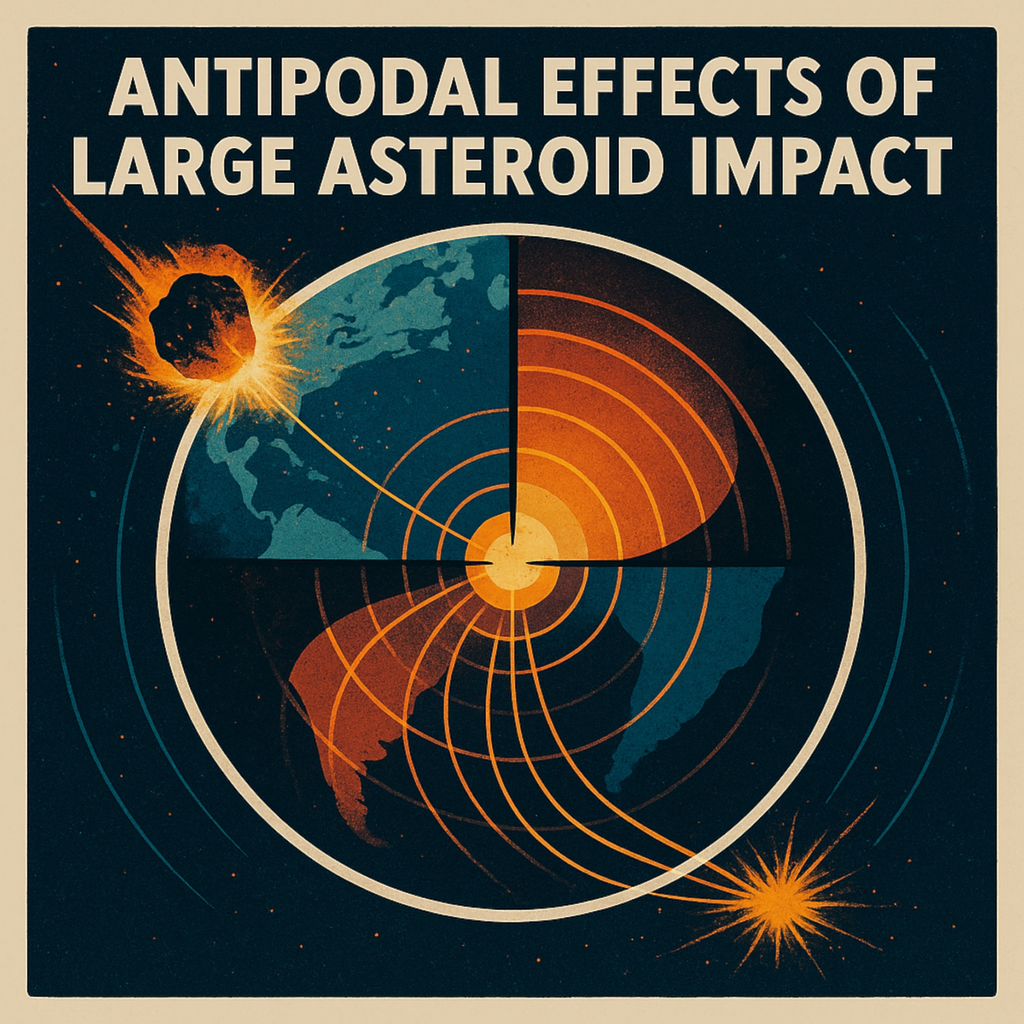
What Happens On The Opposite Side of The Earth When Large Asteroids Impact?

What Happens On The Opposite Side of The Earth When Large Asteroids Impact?

In the shadow of every great cataclysm, Earth bears silent witness at its farthest point. When a large asteroid slams into the surface, shockwaves reverberate through the planet’s core and mantle, sometimes converging with uncanny intensity at the antipode—the exact opposite point on the globe. Though Earth’s complex internal structure scatters much of this energy, simulations and planetary analogs suggest that under the right conditions, this seismic convergence can fracture the crust, trigger earthquakes, and in rare cases, awaken dormant volcanic systems. The haunting possibility that Chicxulub’s impact helped unleash the Deccan Traps reminds us that even the far side of Earth can feel the violence of a distant cosmic blow. Antipodal echoes may be subtle, but they are real—a testament to the planet’s dynamic interconnectedness.

Translation missing: en.general.search.loading