OzGeology Articles

The Country Where Gold is Literally Everywhere: Ghana

The Country Where Gold is Literally Everywhere: Ghana

Ghana is one of the most gold-rich regions on Earth, with thousands of tonnes mined over centuries and a geological system that continues to produce massive amounts of gold today. This video explores why Ghana is so rich in gold, diving into the Ashanti Belt, Birimian greenstone belts, and the ancient processes that concentrated gold across the region. From crustal deformation and hydrothermal fluids to alluvial deposits and modern mining, this is the full geological story behind one of the world’s greatest gold provinces.

This Gold Prospecting Secret Changes Everything: The Iron Gold Relationship

This Gold Prospecting Secret Changes Everything: The Iron Gold Relationship

Most prospectors walk past iron-stained ground without realizing it can be one of the strongest indicators of gold. This video explains how iron-rich rocks, gossans, and oxidized sulfide zones form—and why they often signal hidden gold deposits. Learn how gold is locked inside sulfides like pyrite and arsenopyrite, how oxidation releases it, and how to identify the exact geological signs that most people miss. If you want to stop guessing and start targeting real gold systems, this is essential knowledge.

Inside Australia’s Largest Oil Field Ever Discovered

Inside Australia’s Largest Oil Field Ever Discovered

Explore inside Australia’s largest oil field ever discovered—the Kingfish Oil Field in the Gippsland Basin. Learn how over 1 billion barrels of oil formed, where it’s located in Bass Strait, how offshore drilling works, and the geology behind Australia’s richest petroleum system. From seismic discovery to modern extraction and decline, this deep dive covers everything about oil formation, reservoir rocks, and Australia’s oil and gas industry.

This New Oil Discovery Could Change Everything in Australia

This New Oil Discovery Could Change Everything in Australia

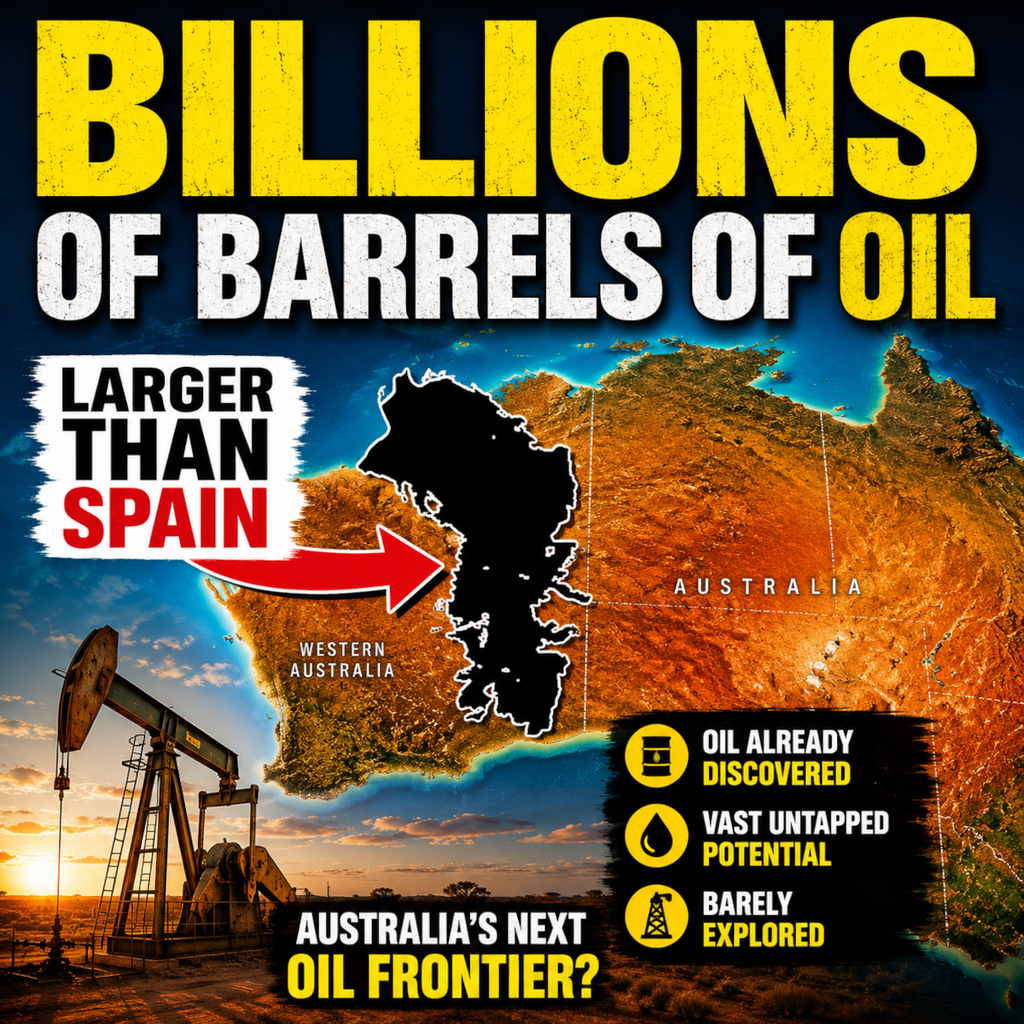
Australia’s energy landscape may be on the verge of a major shift with the emergence of a potential new oil province in Queensland’s Taroom Trough. Long overlooked as part of the broader Bowen and Surat Basin system, this region is now being re-evaluated using modern petroleum geology, revealing a fully functioning hydrocarbon system capable of generating, migrating, and trapping oil. With Permian source rocks like the Blackwater Group and key reservoir units such as the Precipice Sandstone, geologists are now targeting deeper, previously unexplored structures that may still contain significant untapped oil reserves. As exploration ramps up, this discovery could reshape Australia’s domestic energy future and mark the first new oil province identified in decades.

Did A Gold Mine Cause A Record Breaking Earthquake in Australia?

Did A Gold Mine Cause A Record Breaking Earthquake in Australia?

A magnitude 4.5 earthquake struck near Orange, New South Wales in April 2026, becoming the largest recorded in the Cadia region in years. This unusually shallow earthquake was felt up to 300 km away, raising serious questions about whether mining at Cadia Valley Operations may have triggered the event. This video explores the science behind shallow earthquakes, fault reactivation, and how large-scale gold mining operations can redistribute stress in the Earth’s crust. Was this earthquake purely natural, or could human activity have played a role? Dive into Australian geology, seismic activity in NSW, and the real mechanics behind mining-induced earthquakes.

The Shocking 190 Metre Tall MEGA TSUNAMI of 1792

The Shocking 190 Metre Tall MEGA TSUNAMI of 1792

In 1792, a massive landslide at Mount Unzen triggered a devastating megatsunami in the Ariake Sea, killing 15,000 people. This video explores how a collapsing volcanic dome generated an extreme wave possibly reaching 190 metres, and why this remains one of the most powerful and least understood tsunami disasters in history.

How Australia Engineered Its Own Fuel Crisis

How Australia Engineered Its Own Fuel Crisis

Australia is facing a growing fuel crisis as petrol and diesel prices surge past $3.30 per litre, exposing a major weakness in the nation’s energy system. Despite having significant oil and gas resources, Australia relies heavily on imported refined fuel, making it vulnerable to global disruptions like the closure of the Strait of Hormuz. This video explains how refinery closures, low fuel reserves, and dependence on overseas supply chains have left Australia exposed, and explores whether the country could achieve fuel self-sufficiency through domestic oil production, LPG, and synthetic fuels.

The Richest River of Gold in the World in New Zealand

The Richest River of Gold in the World in New Zealand

The Shotover River is known as the richest gold river in the world, producing millions of ounces of gold during the Otago gold rush. Flowing through the rugged cliffs of Skippers Canyon, this river became a natural gold concentration system, where high-energy water, steep terrain, and repeated flooding worked together to trap and refine gold into incredibly rich deposits. This video explores the geology behind these world-class placer deposits, how gold forms in schist-hosted quartz systems, and why the Shotover remains one of the most fascinating gold-bearing environments ever discovered.

The Dirty Truth Behind Renewable Energy

The Dirty Truth Behind Renewable Energy

The green energy revolution depends on massive mining. Discover the hidden truth behind renewable energy, electric vehicles, and the critical minerals driving the transition.

This Mine Shouldn’t Exist… But It’s Worth Billions: The Costerfield Mine

This Mine Shouldn’t Exist… But It’s Worth Billions: The Costerfield Mine

Discover the Costerfield Mine in Victoria, Australia—a high-grade underground gold antimony deposit worth billions. Learn how narrow quartz-stibnite veins formed and why antimony is now a critical mineral in global supply chains.

The Devastating 100 Metre Tall MEGA TSUNAMI of 1888

The Devastating 100 Metre Tall MEGA TSUNAMI of 1888

In 1888, Ritter Island collapsed into the ocean, triggering a devastating mega tsunami. This video explores how volcanic landslides create tsunamis, the science behind extreme wave heights, and why this forgotten disaster may have produced waves over 100 metres tall. Learn how landslide-generated tsunamis differ from earthquake tsunamis, why the ocean receded before impact, and what this event reveals about future coastal hazards.

One of the World’s Most Critical (Yet Overlooked) Resources: Bauxite

One of the World’s Most Critical (Yet Overlooked) Resources: Bauxite

Bauxite is one of the world’s most critical yet overlooked resources, forming the foundation of global aluminium production. This video explores the massive Weipa bauxite deposit in Queensland, Australia, and explains how lateritic weathering creates aluminium-rich ore over millions of years. Discover how pisolitic bauxite forms, why the deposit is still evolving today, and how this quiet resource powers modern infrastructure, renewable energy, and global industry.

Support The Channel

If you enjoy the videos and want to help keep the OzGeology channel going, consider supporting us on Patreon.
Creating high-quality geology content takes a huge amount of time, research, and fieldwork — and your support helps make it all possible.

While we don't offer extra perks or bonus content (because every spare moment already goes into making the videos you see), your support directly helps fund new episodes, equipment, and exploration trips. And all patrons' names are listed at the end of every episode as a thank you.

If you love what OzGeology is all about, and want to be part of the journey, we’d be honored to have you as a Patreon supporter.

👉 Join us on Patreon


Every bit of support truly makes a difference — thank you!


Translation missing: en.general.search.loading