One of the World's Largest Sapphire Fields
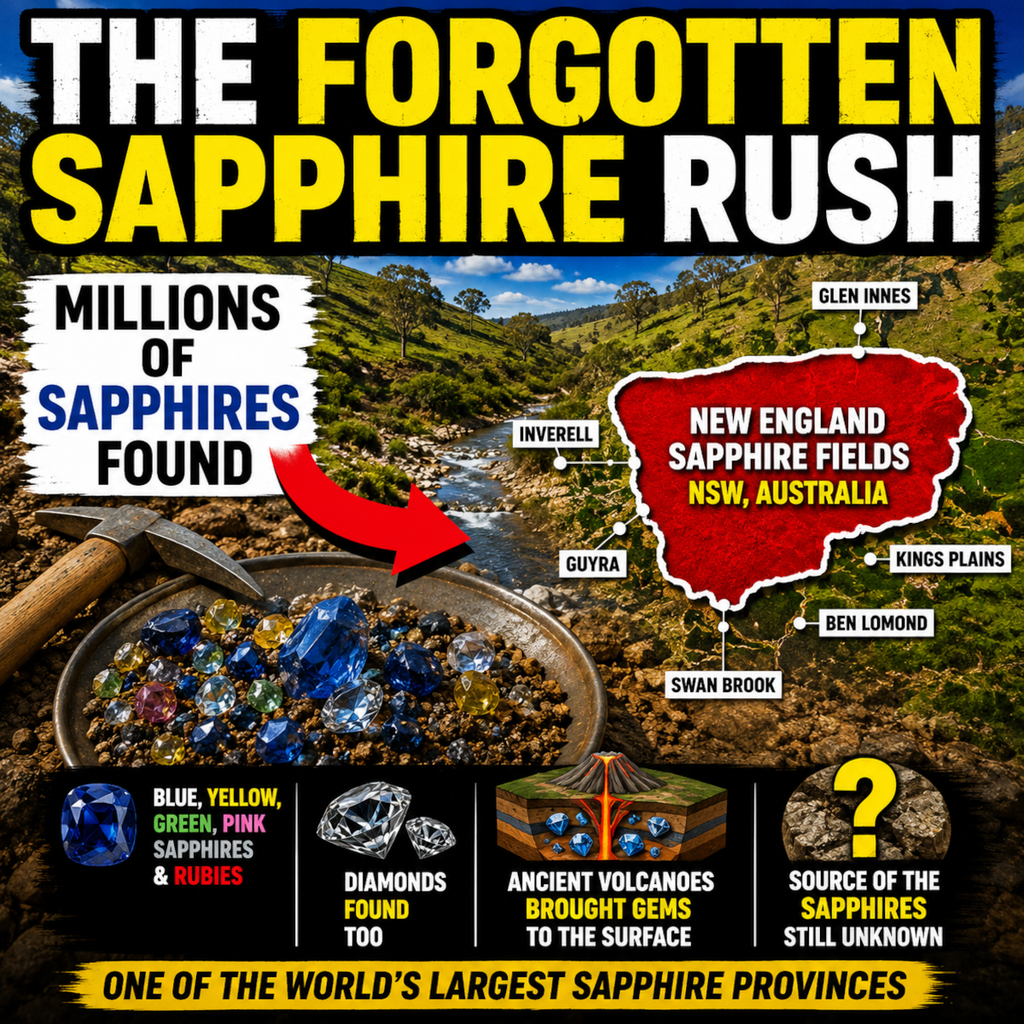
The New England Sapphire Fields of northern New South Wales are among the largest sapphire-producing regions on Earth, yet they remain one of Australia's greatest geological mysteries. For more than a century, miners have recovered millions of sapphires from streams, ancient buried river channels, and volcanic landscapes stretching across Inverell, Glen Innes, Kings Plains, Guyra, Ben Lomond, and Swan Brook. Blue sapphires, parti sapphires, yellow sapphires, green sapphires, rubies, and even diamonds have all been discovered throughout the region. What makes the field so remarkable is that geologists still cannot identify the original source of the sapphires themselves. Ancient volcanoes acted as geological elevators, transporting gemstones from deep beneath the Earth's surface before rivers concentrated them into rich alluvial deposits. Yet the rocks in which the sapphires originally formed remain unknown. Combined with buried palaeochannels, unexplained diamond occurrences, and unique gemstone chemistry, the New England Sapphire Fields remain one of the most fascinating and unsolved geological puzzles in Australia.