
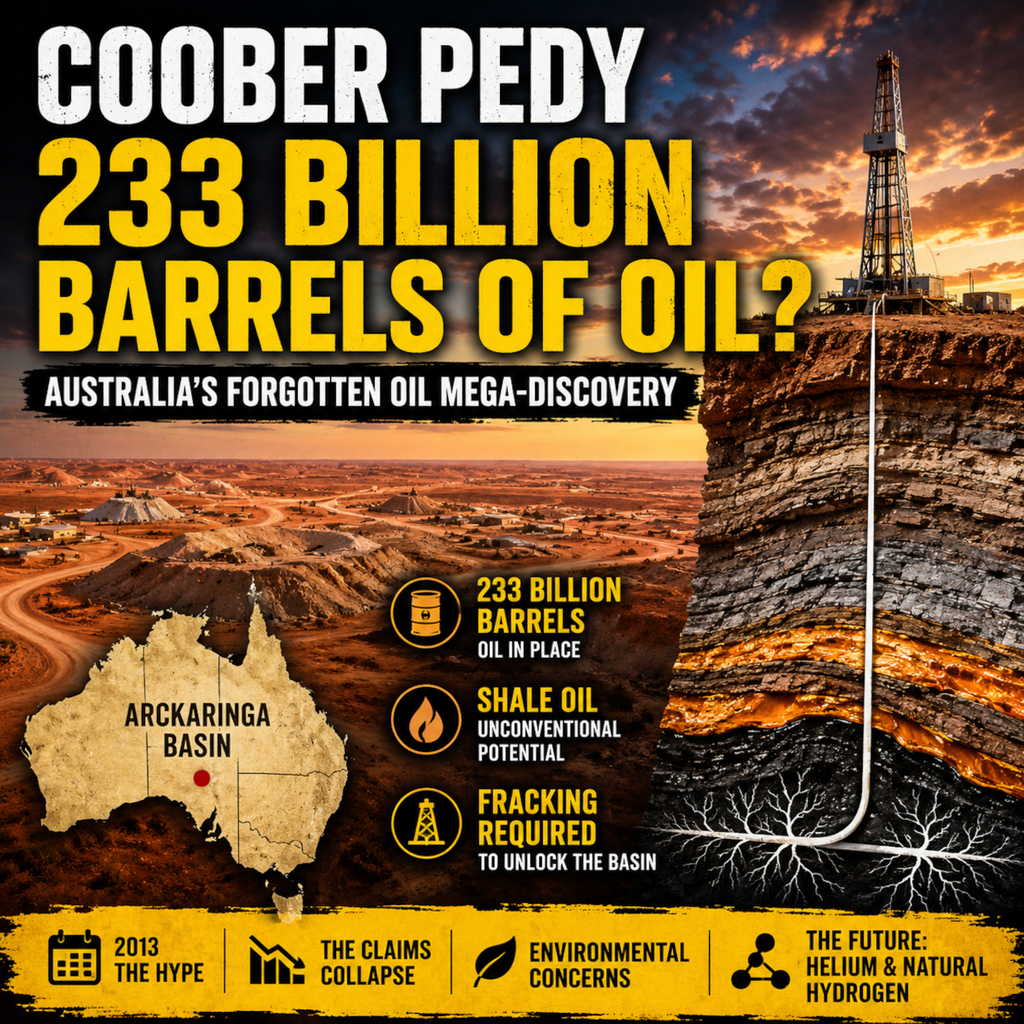
Australia’s $30 Trillion Oil Discovery Beneath the Outback

Australia’s $30 Trillion Oil Discovery Beneath the Outback

In 2013, headlines claimed the Arckaringa Basin near Coober Pedy could contain up to 233 billion barrels of shale oil, triggering comparisons to Saudi Arabia and raising the possibility that Australia had discovered one of the largest unconventional oil resources on Earth. But was this truly Australia’s forgotten oil mega-discovery, or just an overhyped shale estimate that never stood up to scrutiny? This geology deep dive explores the petroleum geology of the Arckaringa Basin, the controversial Coober Pedy oil discovery claims, the difference between oil in place and recoverable reserves, and why hydraulic fracturing would have been essential to unlock this remote South Australian resource. From Linc Energy’s trillion-dollar claims to environmental controversy, failed momentum, and the basin’s modern pivot toward helium and natural hydrogen exploration, this is the full story behind Australia’s abandoned outback oil dream.
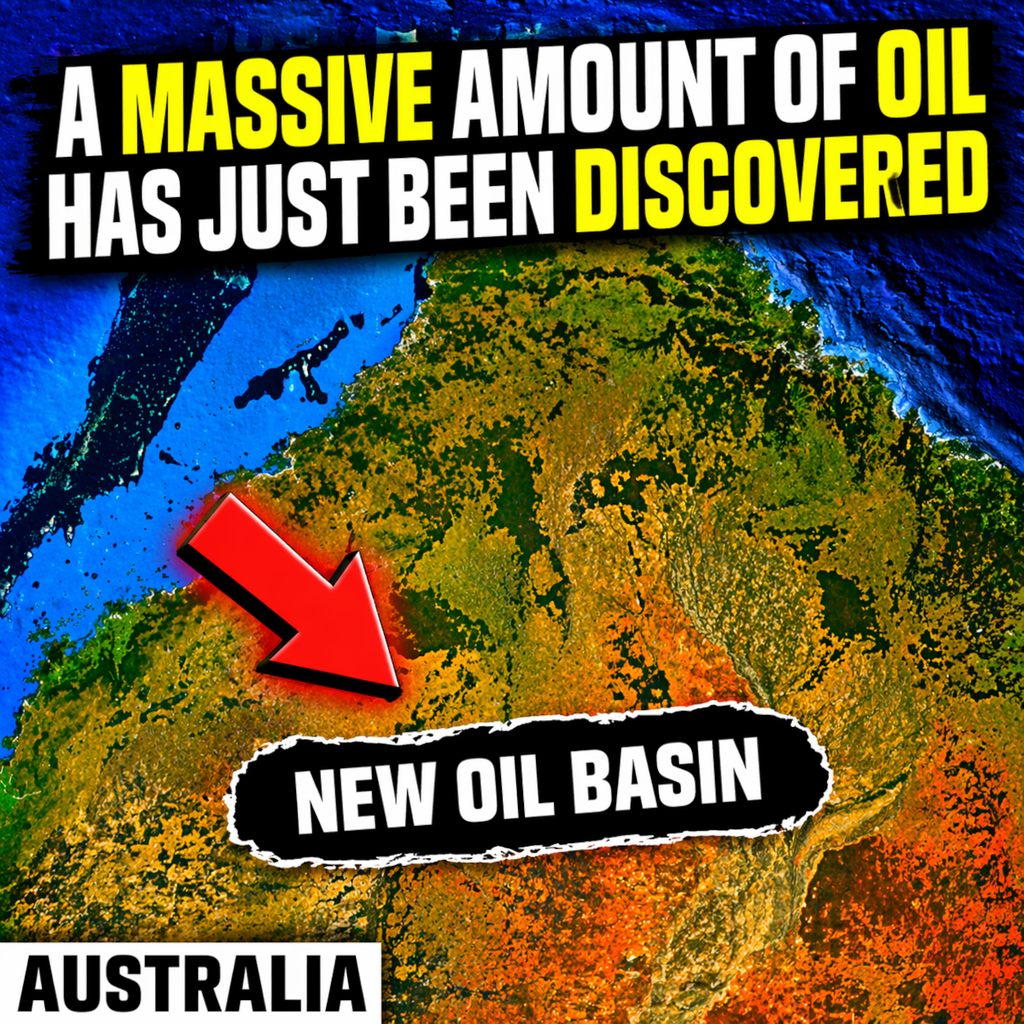
This New Oil Discovery Could Change Everything in Australia

This New Oil Discovery Could Change Everything in Australia

Australia’s energy landscape may be on the verge of a major shift with the emergence of a potential new oil province in Queensland’s Taroom Trough. Long overlooked as part of the broader Bowen and Surat Basin system, this region is now being re-evaluated using modern petroleum geology, revealing a fully functioning hydrocarbon system capable of generating, migrating, and trapping oil. With Permian source rocks like the Blackwater Group and key reservoir units such as the Precipice Sandstone, geologists are now targeting deeper, previously unexplored structures that may still contain significant untapped oil reserves. As exploration ramps up, this discovery could reshape Australia’s domestic energy future and mark the first new oil province identified in decades.

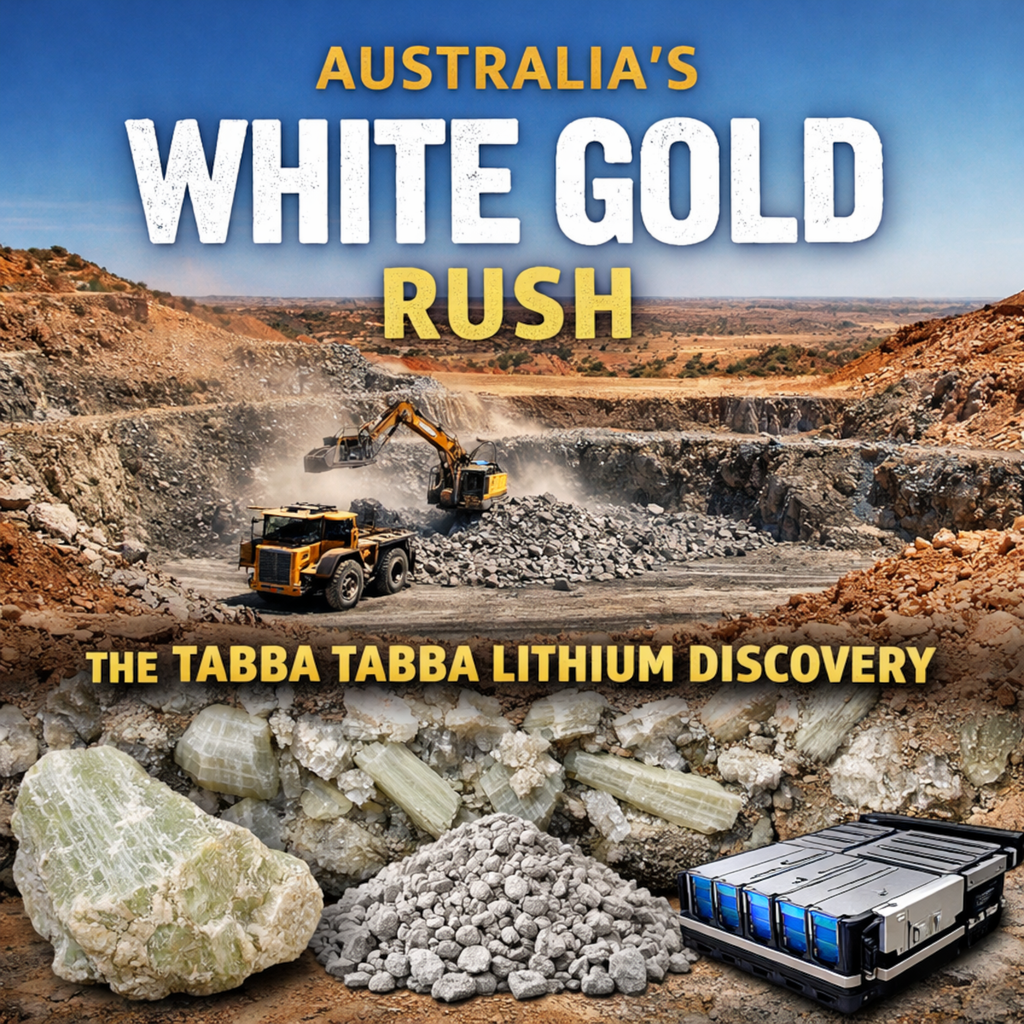
The New $11 Billion White Gold Rush in Australia

The New $11 Billion White Gold Rush in Australia

Lithium has become the world’s new white gold, and Australia is emerging as one of the most critical suppliers in the global battery metals race. In the Pilbara region of Western Australia, the Tabba Tabba lithium deposit is transforming from a forgotten tantalum field into a world-class hard rock lithium project with the potential to generate billions of dollars in value. This article explores how Tabba Tabba was discovered, why its lithium was overlooked for decades, how its unique geology concentrated spodumene-rich pegmatites, and what its development means for Australia’s role in the electric vehicle and energy transition boom.

Translation missing: en.general.search.loading